Posts

Image
By Dr. David Stewart, Ph.D.  The Chemistry of Essential Oils If you tell most medical doctors that essential oils bring about healing with no negative side effects, they won’t believe you. This is because in medical school, students are repeatedly told by their professors that all effective medicines have negative side effects, and if they don’t then they can’t be effective. When I was in medical school one professor emphasized this point in a colorful, graphic manner with specially prepared slides. In each slide specific drugs were depicted as evil looking demons or goblins. As he presented each picture, he explained, “Although ugly and capable of doing harm, these ‘demons’ are also the bearers of some good. So long as the benefits outweigh the risks, we use them,” he  summarized. “We have no choice,” he continued, “because if a drug has no dangers, then it can have no benefits. That’s just the way it is. And that’s why it is essential that only qualified physicians be ...
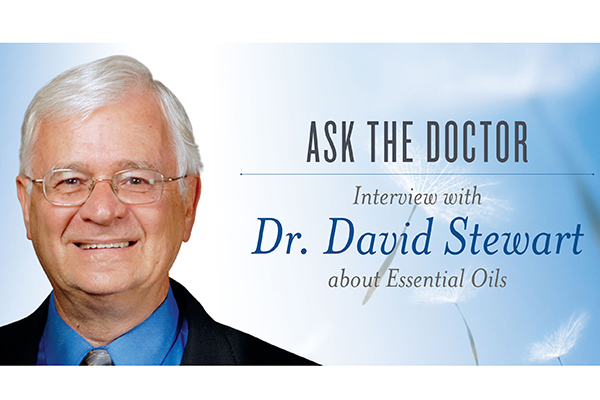
WHAT ARE ESSENTIAL OILS? Interview with Dr. David Stewart

Image
Cut through the marketing jargon and hype about essential oils with science-based, practical answers from Dr David Stewart, a doctor of natural medicine. Interview by  Patricea Chow WHAT ARE ESSENTIAL OILS? How to tell if they are pure or of good quality? How do they support wellness? These are questions that new users of essential oils have. As there are many different answers from various sources to these same questions, it is difficult to know which is the safest option for our family and ourselves. Thankfully, Dr. David Stewart has the answers. A Doctor of Natural Medicine, Dr Stewart has been recognized and awarded by the World Organization of Natural Medicine Practitioners, and is also a registered aromatherapist with the Aromatherapy Registration Council. He has also authored and co-authored over 200 published works, and is a lecturer who has spoken throughout the USA, Canada, and many international countries. What are essential oils and how do they work? Essen...

12 Safety Rules for Essential Oils

Image
(The Chemistry of Essential Oils Made Simple, by David Stewart. Page 486) 1. Keep them out of reach of children. Consider them as you would any therapeutic product in your home. 2. Keep a bottle of carrier oil handy (olive, coconut, jojoba, etc). It will dilute an essential oil and slow down its rate of absorption if there should be any discomfort or skin irritation. 3. People with sensitive skin can use a patch test to determine if they would react to a particular oil. It is generally safe to apply essential oils to the soles of the feet even for people with sensitive skin. 4. Pregnant women should consult their health care professional before using essential oils. Oils with hormonal qualities should probably be avoided. EO with hormonal benefits – fennel, anise, sage, clary sage, blue tansy, tarragon, niaouli, cypress, myrtle, wild tansy, chamazulene (found in blue tansy), helichrysum & German chamomile. Taken from page 413 of The Chemistry of Essential Oils Made E...

FAQ'S ABOUT ESSENTIAL OILS

Image
What are essential oils? Sometimes called the "life force" of a plant, therapeutic grade essential oils are very complex. They are stored in special cells, ducts or glandular hairs that are distributed among the flowers, leaves, bark, stems and roots of a plant. These oils protect the plant from insects and other herbivores, from bacteria, molds, fungi and other micro-organisms. They also help to heal inflicted wounds. These unique characteristics make essential oils highly beneficial to humans. A single oil may contain hundreds of constituents that are molecularly aligned in exactly the right manner to trigger a number of responses in the human body. Essential oils are used by chiropractors, aromatherapists, reflexologists, massage therapists and others interested in alternatives to prescription drugs. 1. I’m new to essential oils. How are they used? Each bottle of Young Living essential oil is labeled with directions for how that oil can be used, and these directions...

Message from Dr. David Stewart

Image
""If you have heard any rumors that I, David Stewart, have affiliated myself with any Essential Oil Company other than Young Living Essential Oils, Inc., please disregard them as false because they are untrue and have no basis in truth. As a Young Living Diamond Distributor, my loyalty to Young Living, and to Gary and Mary Young, is complete and without reservation. If any such rumors become known to you, please send me an email revealing the content and the source. I would appreciate it. Otherwise, just ignore any such reports. Why would I affiliate with any other company when we are long established with Young Living, whose oils are without equal in purity and therapeutic quality anywhere in the world, and whose corporate integrity is as good as it gets?" Thanks Dave Dr. David Stewart, Ph.D., Executive Director, National Association of Parents and Professionals for Safe Alternatives in Childbirth (NAPSAC) International. http://m.digitaljournal.com/article/3...

What is a DETOX REACTION

From the Essential Oils Pocket Reference, 6th Edition (Life Science Publishers)  "Many chemicals are easily absorbed through the skin due to its permeability. One study found that 13% of BHT (butylated hydroxytoluene) and 49% of DDT (a carcinogenic pesticide) can be absorbed into the skin upon topical contact. Once absorbed, many chemicals can become trapped in the fatty subdermal layers of skin, where they can leach into the bloodstream. They can remain trapped for several months or years until a topical substance like an essential oil starts to move them from their resting place and cause them to come out of the skin in an uncomfortable way. Besides skin irritation, you could experience nausea, headaches, and other slight temporary effects during this detoxifying process. Even in small concentrations, these chemicals and synthetic compounds are toxic and can compromise one's health. It is all about what chemicals were used, how much, how long, and perhaps the lev...

Essential Oils Are NOT Allergens ~ by Dr. David Stewart

Image
 Dr. Stewart's book entitled, "The Chemistry of Essential Oils Made Simple", he answers the question: "Are Essential Oil Allergens?" Consider the following facts:    1) Allergens are almost always composed of proteins or polypeptides, which are relatively large molecules. There are no proteins or polypeptides in essential oils. In fact, nitrogen containing compounds are virtually non-existent in essential oils except in occasional trace amounts. 2) Allergens are composed of large molecules. There are no large molecules in volatile or aromatic oils, otherwise they would be neither volatile or aromatic.  3) There has never been a documented instance of an anti-body response (i.e. sensitization) to an essential oil. Essential oil antibodies have never been found or detected in anyone. Unless sensitization occurs and antibodies are produced and stored in the body, there can be no allergic reaction. Therefore, we can state unequivocally th...